Walking Challenges With a Finish Line
Quests, step races and monthly goals, each with a deadline to beat.




Turn walking into a game you can win
Walking Games stacks up small, real competitions instead of one lonely step goal.
Quests with a deadline
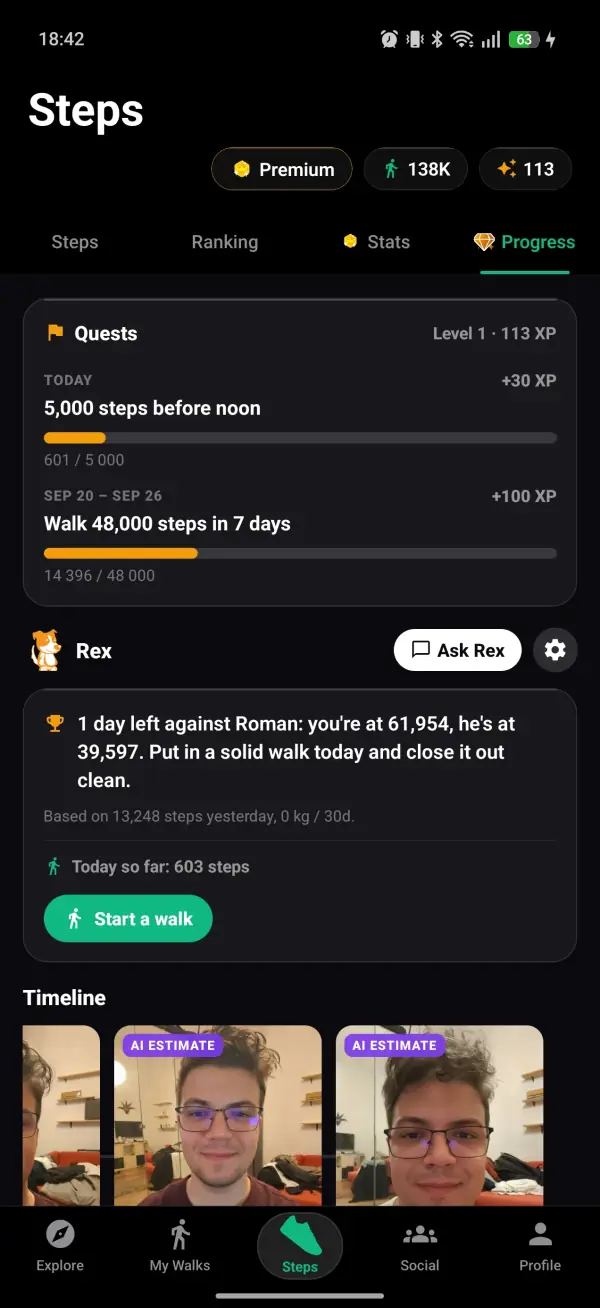
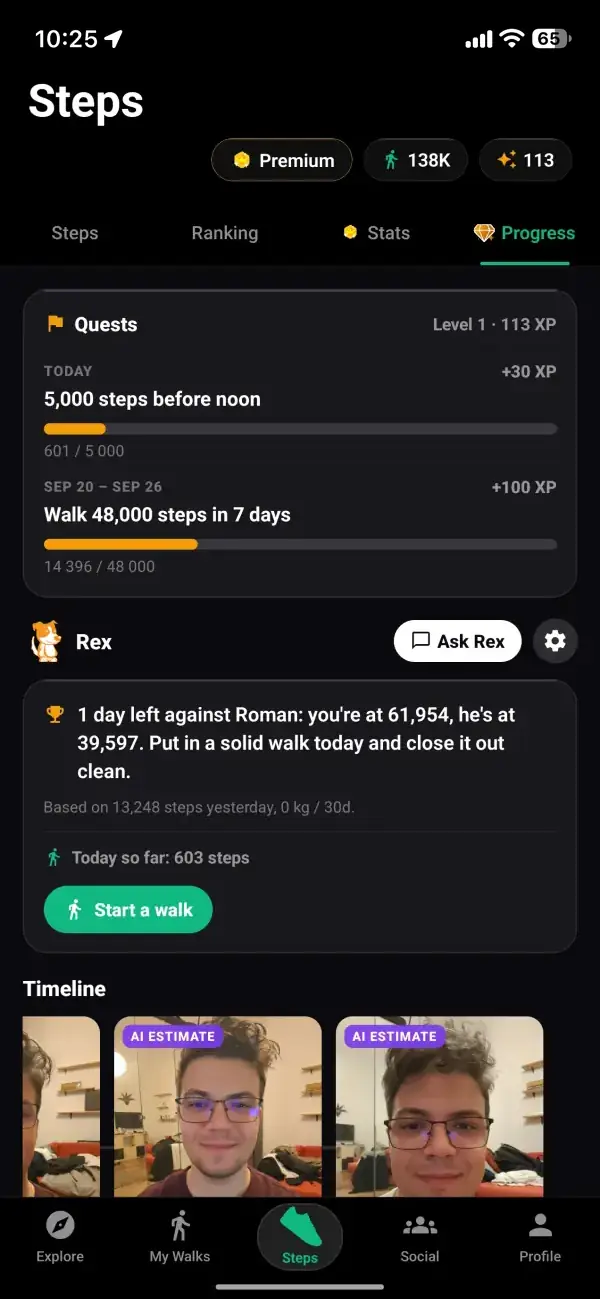
Rex, the in app coach, hands you a daily and a weekly quest, each scaled to your own step goal and worth experience points if you clear it before it runs out. Those points build your level, so a run of good days shows up as something rising rather than a number you forget. The quests change as they expire, which keeps the target fresh, and clearing one lands with a small celebration. It is a challenge sized for today, with a clock on it, for people who walk better with a next thing to do.
Race to a finish line
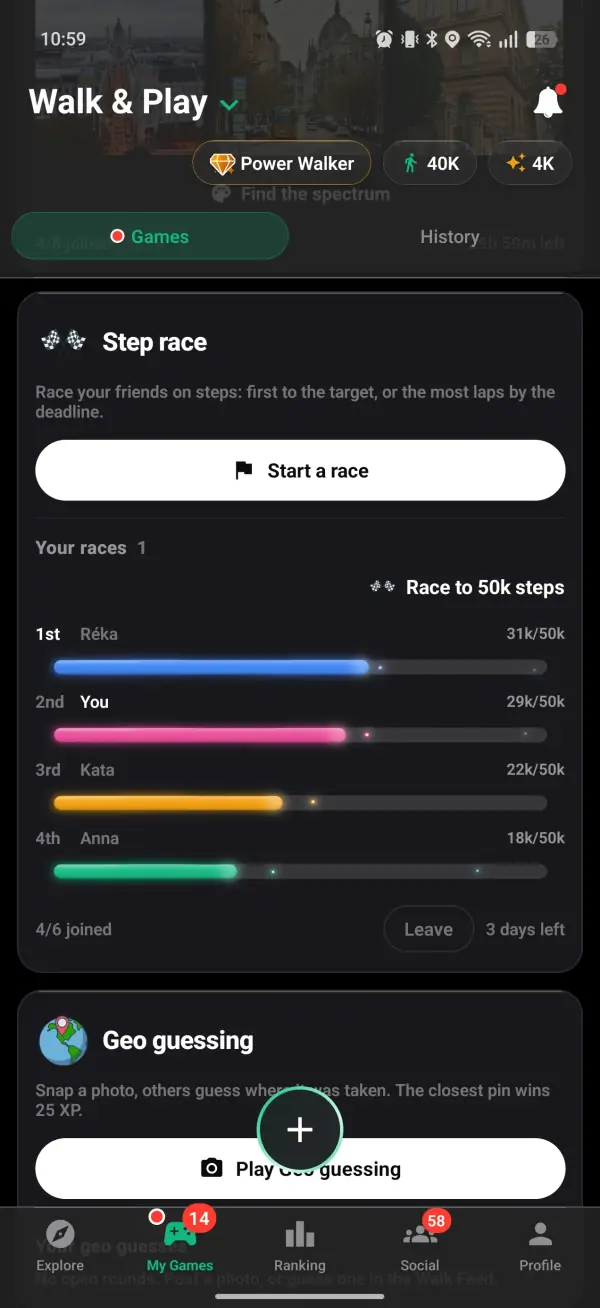
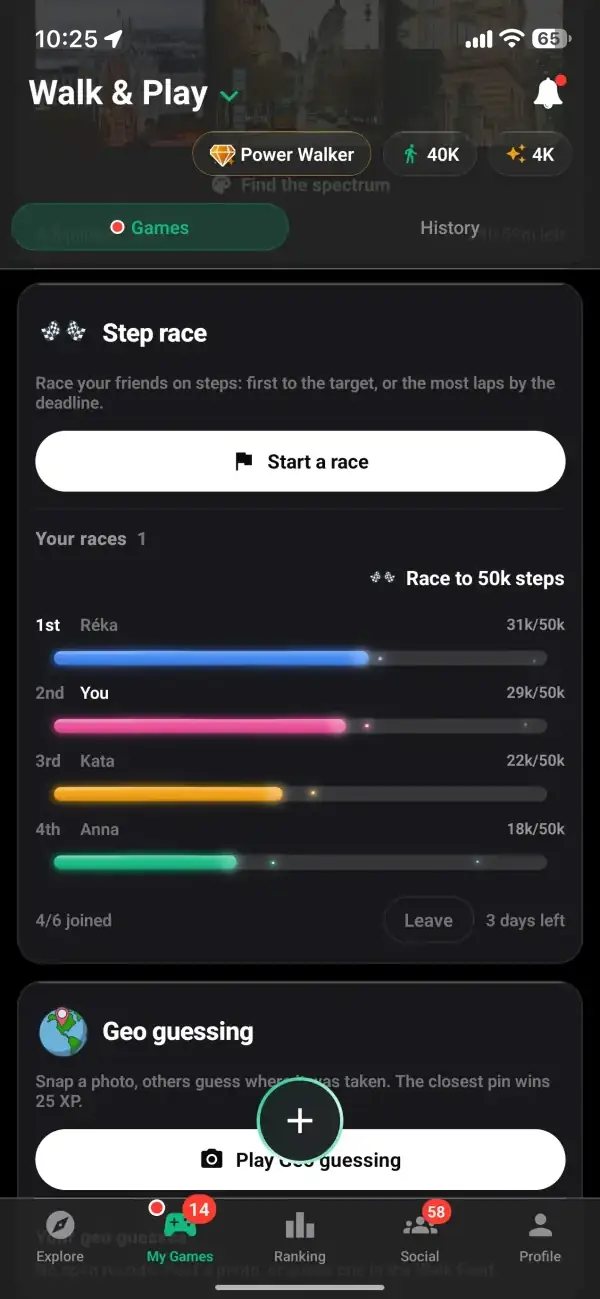
Pick a friend and race them for a set stretch, up to four weeks. You choose the shared step target and whether it is a sprint, first to the target takes it, or laps, most laps by the deadline. Want a bigger field? A group step race takes 2 to 10 walkers, either friends or open to the whole community, so people you have never met can line up against you too. Everyone fills a bar toward the same finish flag, and when the date arrives the race is over and the result stands.
Explore all the walking games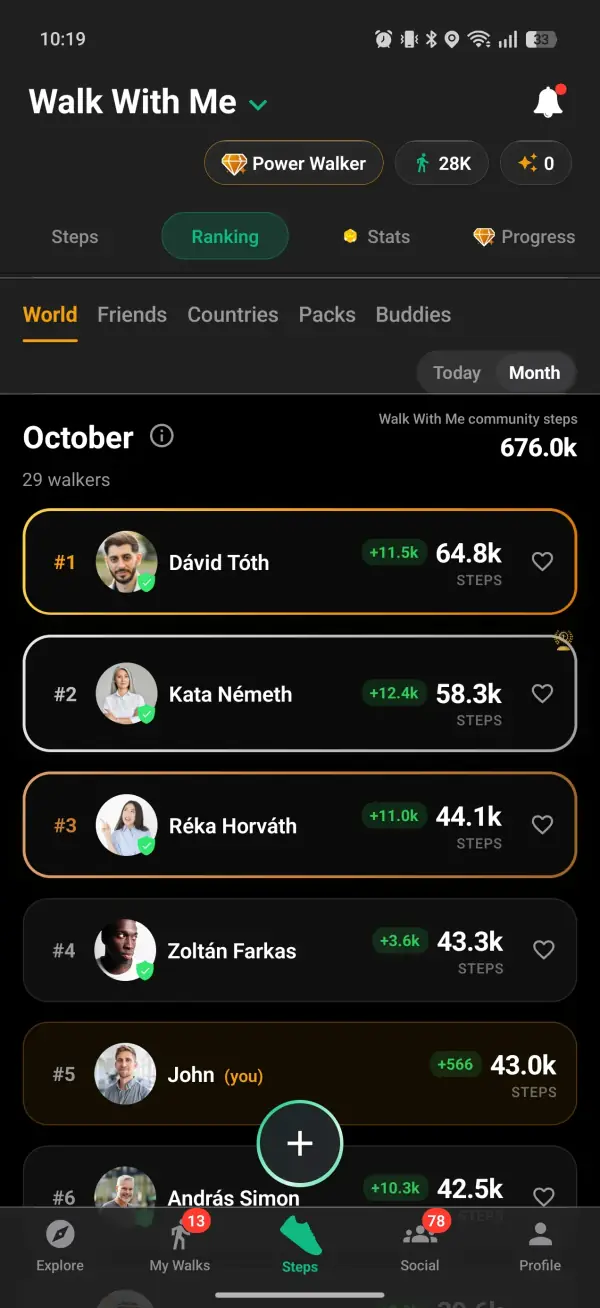
Win the month
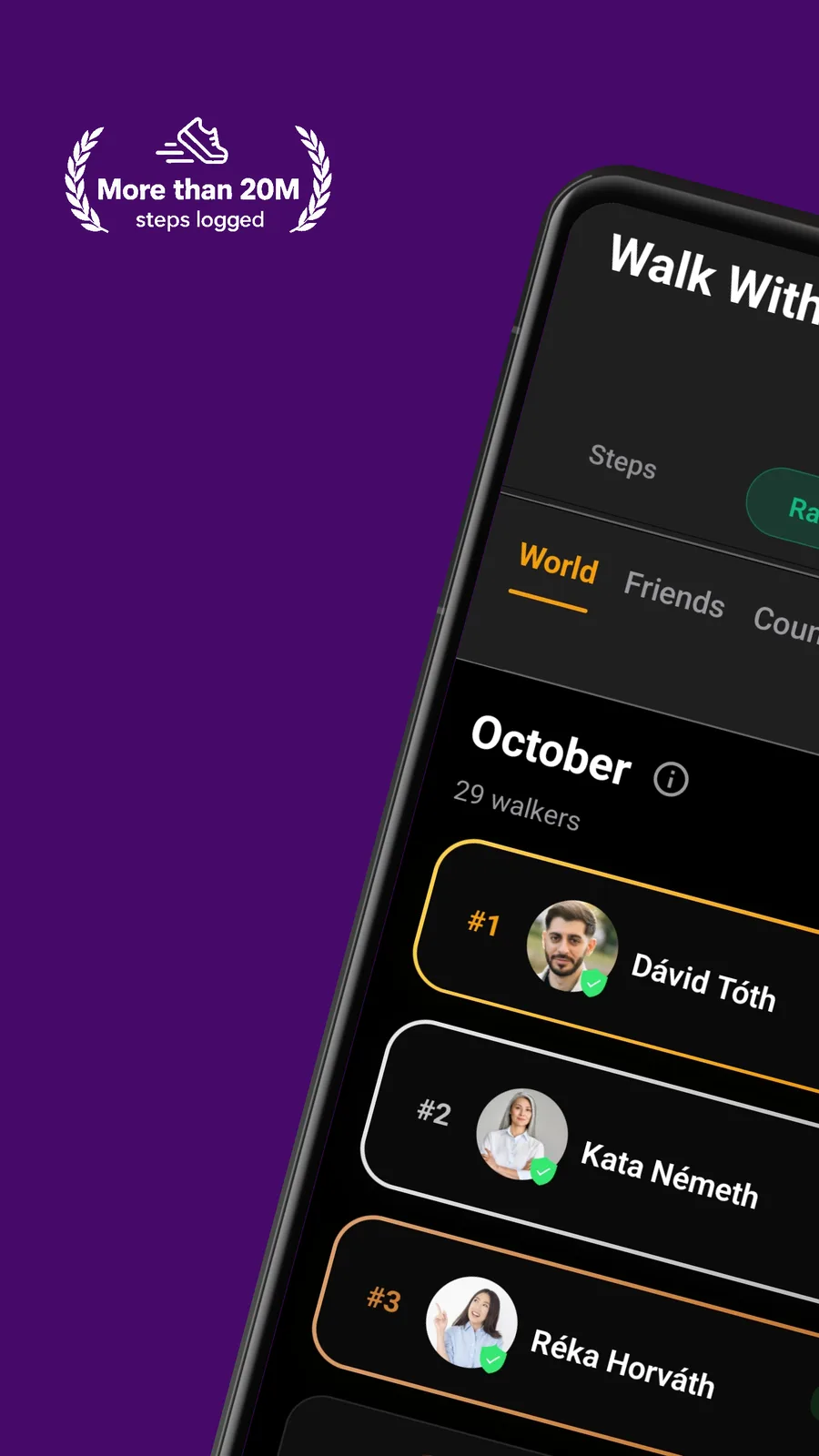
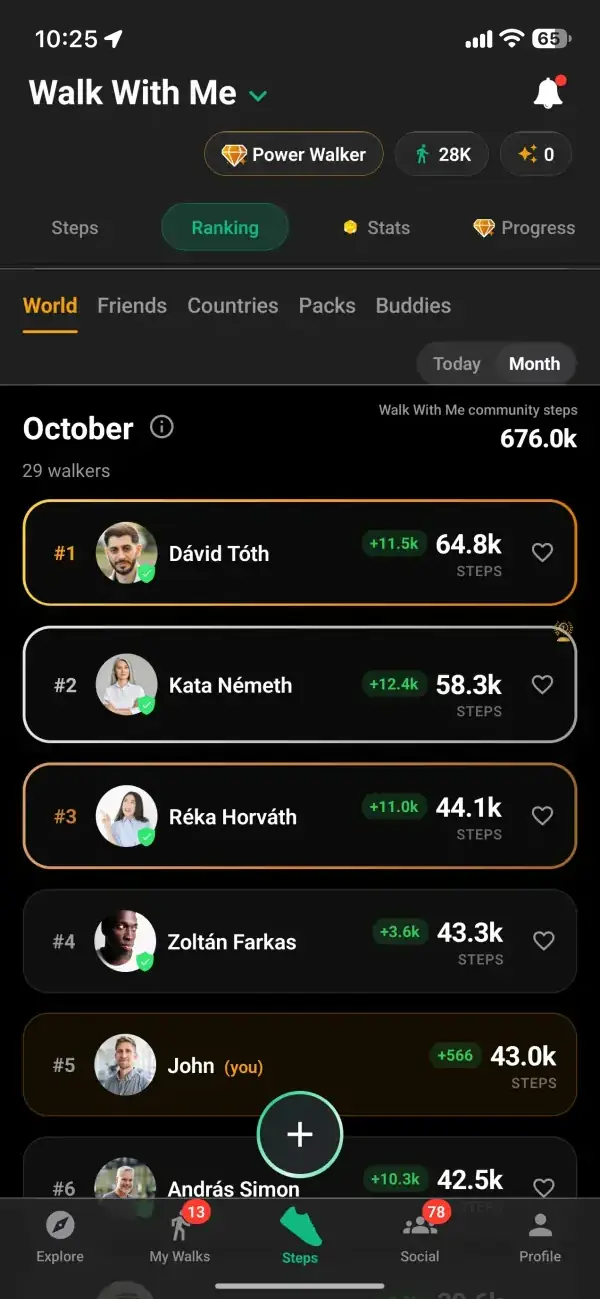
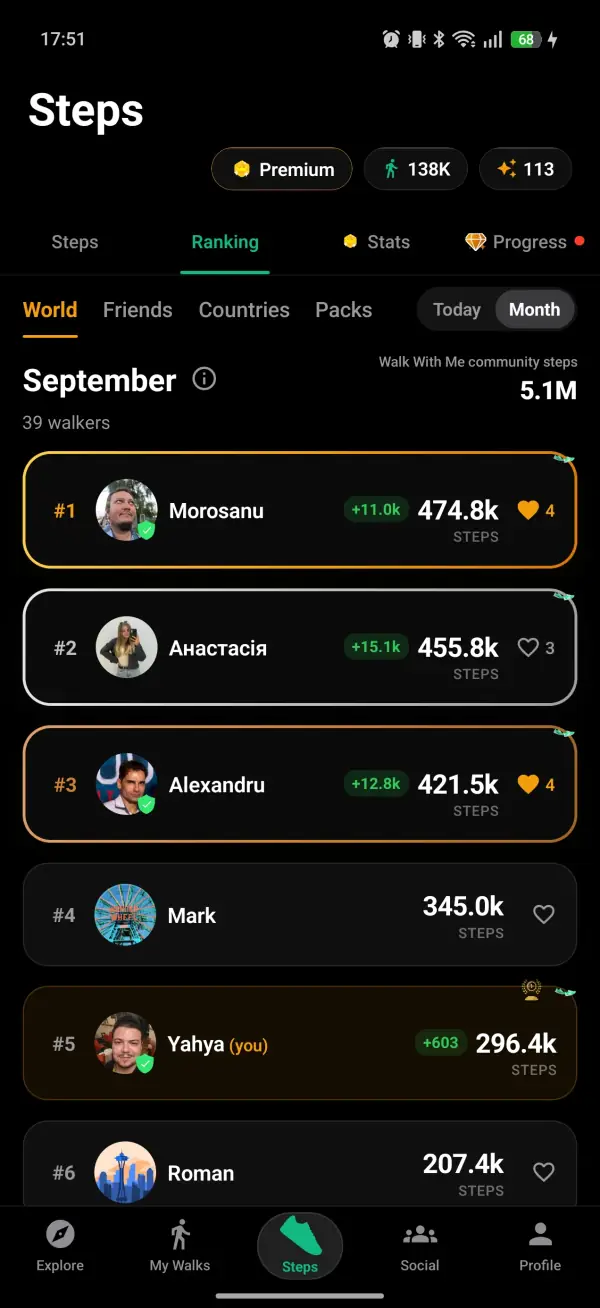
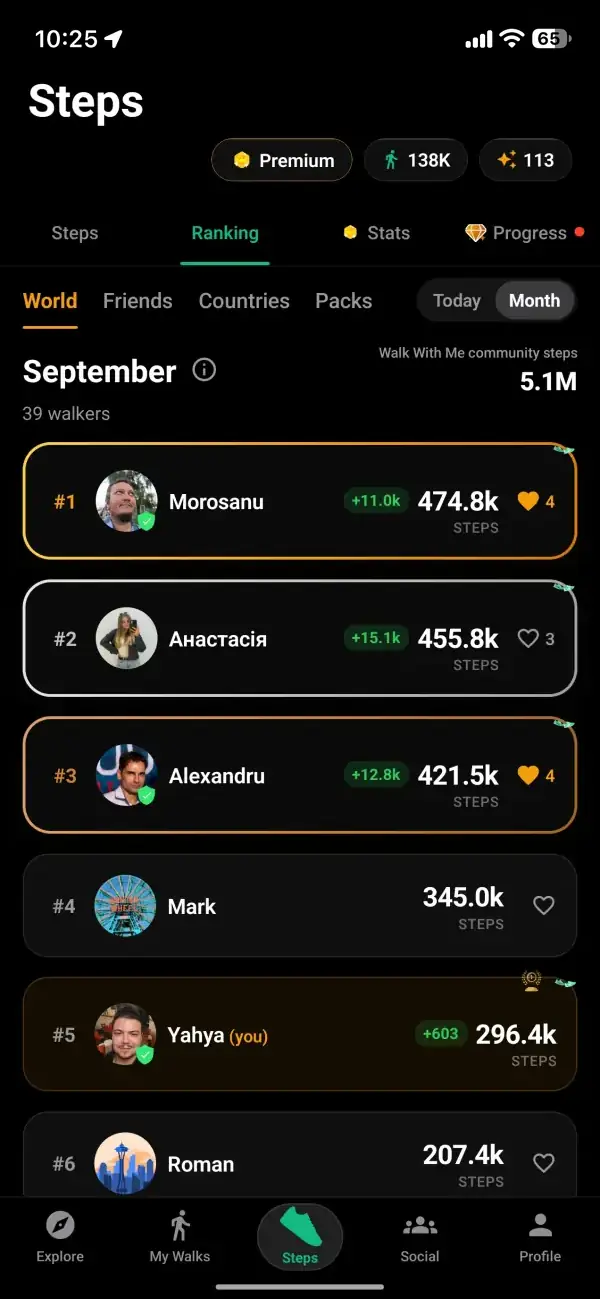
The monthly World board ranks every walker by steps and resets on the first, so the race starts over twelve times a year. The top three at the end of the month win free Premium: 30, 14 and 7 days. Each day's steps are capped before they count, so one huge day cannot run away with it; the month goes to whoever keeps walking. A quiet walk after dinner in the last week suddenly matters when it moves you up two places.
A goal the whole community shares
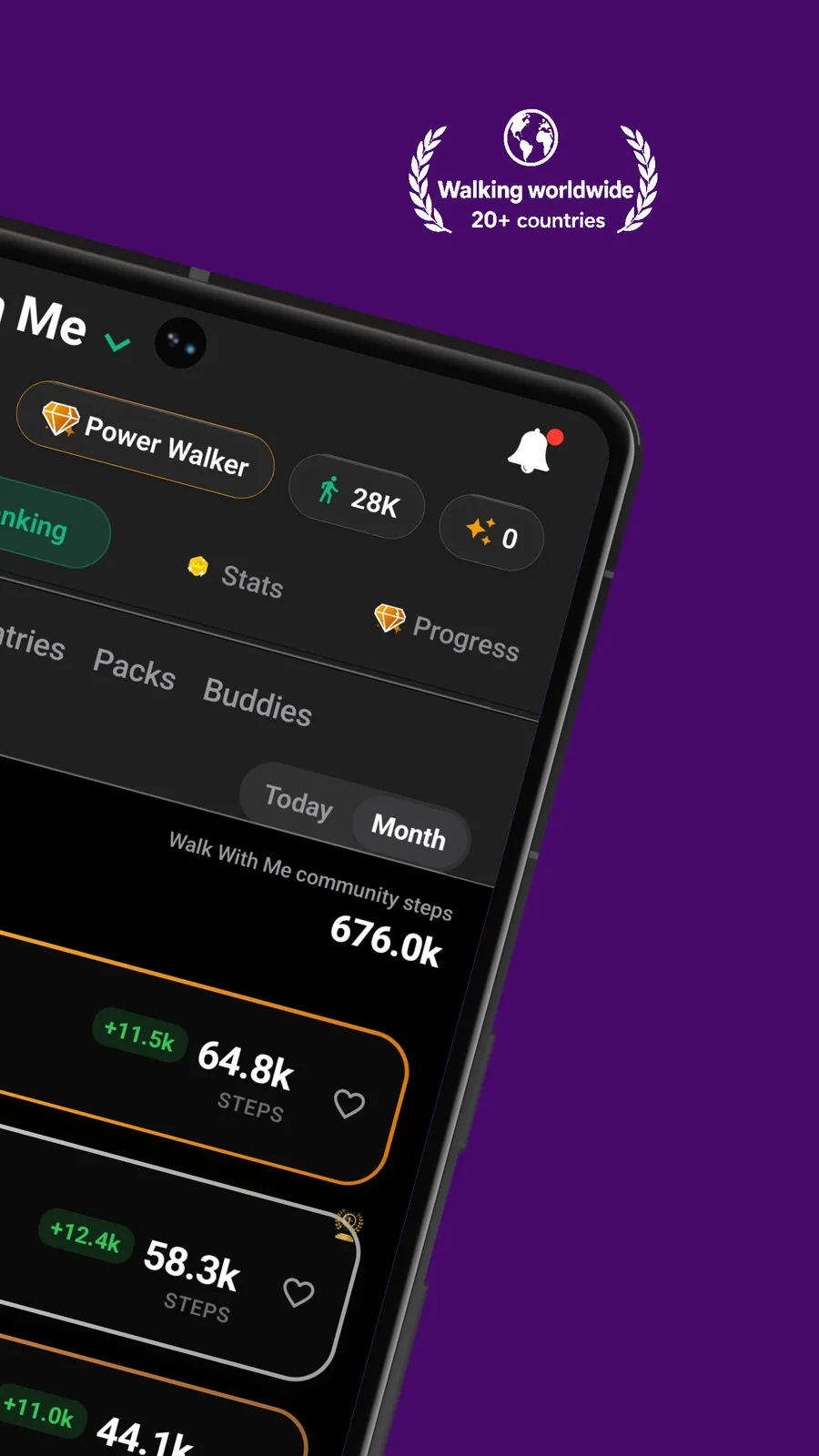
Not every challenge is about beating someone. Each month the whole community walks toward one shared steps goal, and the running total sits at the top of the board for everyone to watch. When the goal is reached, every public walker who logged steps that month gets 14 days of Premium. Your walk adds to everyone's prize, which is a good reason to head out on a day when you are nowhere near the top of the rankings.
Keep Exploring
What makes a walking challenge work
A walking challenge is a step goal with a deadline and a result, such as a target for the day, a race against friends or a place on a monthly ranking. The deadline is what makes it work: an open-ended goal can always wait until tomorrow, and a race that ends on Sunday can't.
Goals with numbers on them do move people. A 2007 review in JAMA (Bravata and colleagues) pooled pedometer studies and found that people using one walked more than 2,000 extra steps a day, and that having a step goal was one of the strongest predictors of the increase. Most of those studies ran for only a few months, so they say more about getting started than about the long haul, which is a good argument for short challenges that end and restart rather than one giant target.
Size each challenge to the weeks you really have. A target a little above what you already walk keeps it winnable, and a two-week race you finish beats a month-long one you abandon in the second week. If you and a friend walk very different amounts, a head-to-head is decided before it starts, so a shared target or a group race with several people usually makes a fairer fight.
It also helps to have a challenge you can win running alongside one you can't lose. A race or a monthly rank gives you a rival; a shared goal, like a pack's weekly bar or the community's monthly total, gives you a team. A run of lost races is the quickest way to stop caring, and a team target keeps the walk worth taking in the weeks when you're nowhere near the top.
Every challenge in Walking Games is free on iPhone and Android: Rex's daily and weekly quests, buddy and group step races, the World, Countries and Packs boards, and the monthly Premium prizes. You don't need friends to start, since the World board and open group races include everyone. If you want walking games on top, the free plan includes six game starts a week, and Premium removes the limit.